"My goal, is to have children take my characters and create new adventures for them" - Mo Willems
Implied or Identified Audience
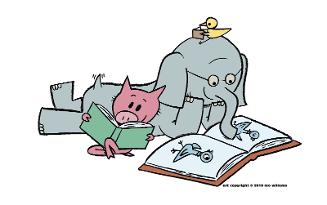
The audience is targeted for young readers aged between 3 and 8 years of age. This is implied through the use of humorous text and simple characters that connect with children on an emotional level. In relation to the themes within his books, Willems divulges,“the thing about writing for kids is that there are no cultural modifiers. . . so all you have to work with is love, anger, jealousy — it’s a very small palette, but the existential crises are ultimately the same” (Willems, 2012). One of the features of Willems’ work is the way he encourages readers to become part of the story, thereby allowing them to interpret the text and images in a way that supports their own understanding (McDonald, 2018).
Always think of your audience, but never think for your audience. What that means is to leave it open to interpretation. I'm not telling things, I'm asking questions. And I'm asking questions that I don't necessarily have the answers to -- Mo Willems
Testimonials
"If there’s a living creator of children’s books who stands a chance of occupying a cultural position akin to a Dr. Seuss or a Charles M. Schulz, it’s Mr. Willems." -- Maria Russo, New York Times